How to Identify High-Quality Tube Fittings
Complete Buyer’s Inspection Checklist for Industrial Applications
Choosing the wrong tube fittings can lead to leaks, system failure, and costly downtime. Whether you’re sourcing for oil & gas, chemical, or manufacturing industries, this guide will help you identify high-quality tube fittings before making a purchase.
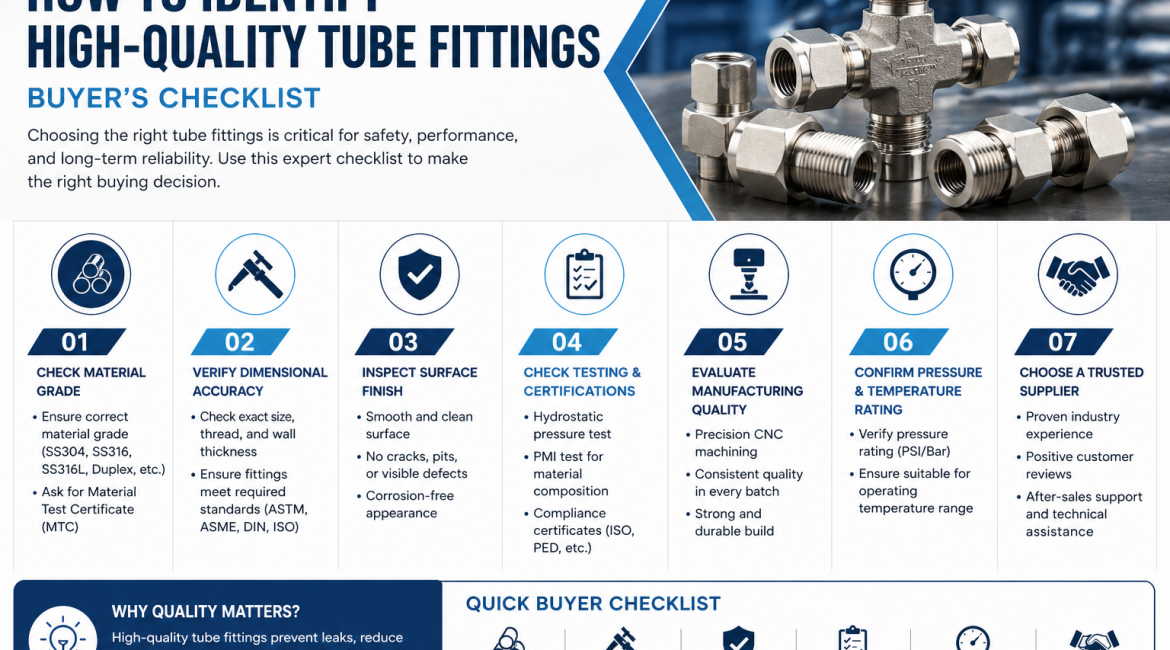
🔍 1. Check Material Grade
Why it matters: Material determines corrosion resistance and lifespan.
- Ensure proper grade (SS304, SS316, SS316L, Duplex)
- Ask for material test certificates (MTC)
- Avoid low-grade or mixed materials
📏 2. Verify Dimensional Accuracy
Why it matters: Even small dimensional errors can cause leakage.
- Check tolerances (micron-level preferred)
- Ensure proper thread size & alignment
- Confirm compatibility with your system
⚙️ 3. Inspect Surface Finish
Why it matters: Poor finishing leads to corrosion and contamination.
- Smooth and polished surface
- No cracks, burrs, or scratches
- Uniform finishing quality
🧪 4. Look for Testing & Certifications
- Hydrostatic pressure testing
- Leak testing
- ISO / ASTM / DIN compliance
- Third-party inspection reports
🔩 5. Evaluate Manufacturing Quality
- CNC precision machining
- Consistent production quality
- Proper threading and fitting design
🌍 6. Supplier Reputation Matters
- Years of experience
- Export history
- Client testimonials
- Industry certifications
💡 7. Check Application Suitability
- Pressure rating compatibility
- Temperature resistance
- Media (chemical, gas, liquid)
✅ Quick Buyer Checklist
- ✔ Correct material grade
- ✔ High dimensional accuracy
- ✔ Smooth surface finish
- ✔ Certified & tested product
- ✔ Trusted manufacturer
- ✔ Suitable for your application
Need Help Choosing the Right Tube Fittings?
Our experts can guide you to select the best fittings for your application.