DIN vs ISO Standards in CNC Machining
What European & German buyers expect from export-ready CNC machining suppliers—and why understanding standards is critical for approval.
In European manufacturing—especially in Germany—engineering standards define trust.
CNC machining suppliers exporting to Germany must understand the difference between
DIN and ISO standards and how these affect drawings, tolerances, inspection, and documentation.
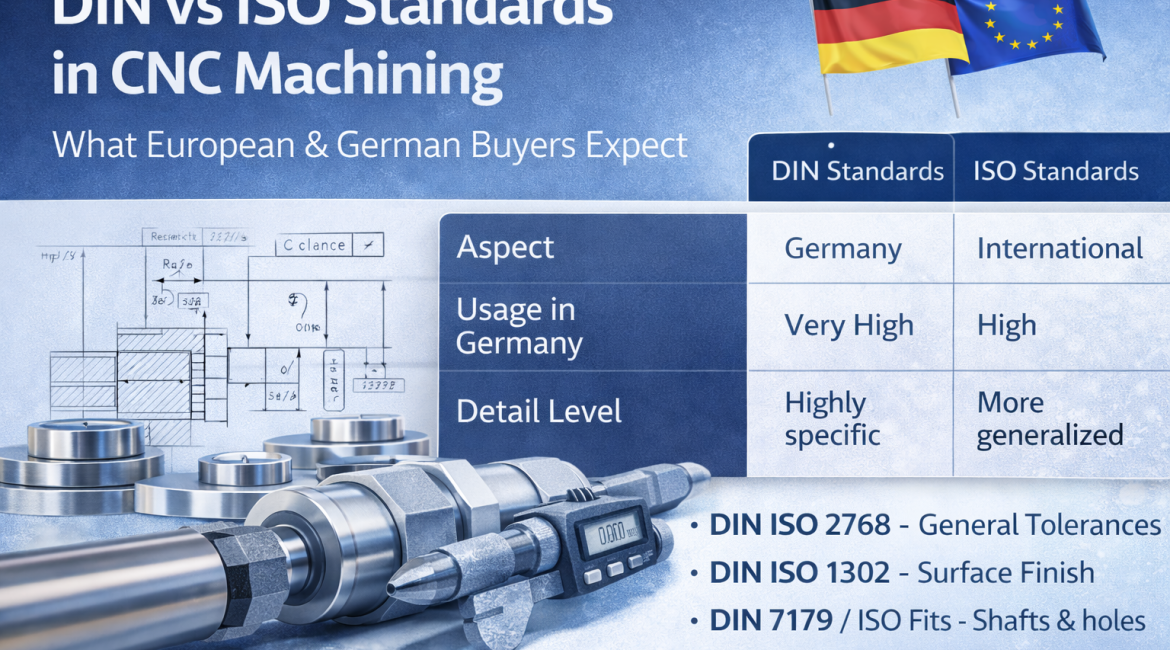
DIN vs ISO: Quick Overview
| Aspect | DIN Standards | ISO Standards |
|---|---|---|
| Origin | Germany | International |
| Usage in Germany | Very High | High |
| Detail Level | Highly specific | More generalized |
Why German Buyers Still Prefer DIN Standards
While ISO standards are globally accepted, many German OEMs continue to rely on DIN standards
because they provide deeper technical clarity and consistency across long-established supply chains.
- Clear definition of tolerances and fits
- Historical engineering continuity
- Reduced ambiguity in drawings
Common DIN & ISO Standards Used in CNC Machining
- DIN ISO 2768 – General tolerances
- DIN ISO 1302 – Surface finish requirements
- DIN 7179 / ISO fits – Shafts and holes
- DIN ISO 8015 – GPS principles
Common Mistakes CNC Suppliers Make
- Assuming ISO is always sufficient for German buyers
- Ignoring DIN-specific drawing notes
- Misinterpreting tolerance stacking
- Missing surface finish requirements
How CNC Suppliers Should Align With German Expectations
- Train engineers on DIN drawing interpretation
- Align inspection plans with DIN/ISO requirements
- Document tolerance verification clearly
- Provide detailed inspection & traceability reports
FAQs – DIN vs ISO in CNC Machining
Do German OEMs accept ISO-only suppliers?
Some do, but many expect DIN-aligned interpretation and documentation.
Are DIN and ISO standards interchangeable?
Not always. Differences in tolerance and interpretation can impact fit and function.
Which standard is more critical for audits?
German buyers typically review both—but prioritize DIN understanding.
Supplying CNC Components to Germany?
Understanding DIN vs ISO standards is key to approval, audits, and long-term supply success.